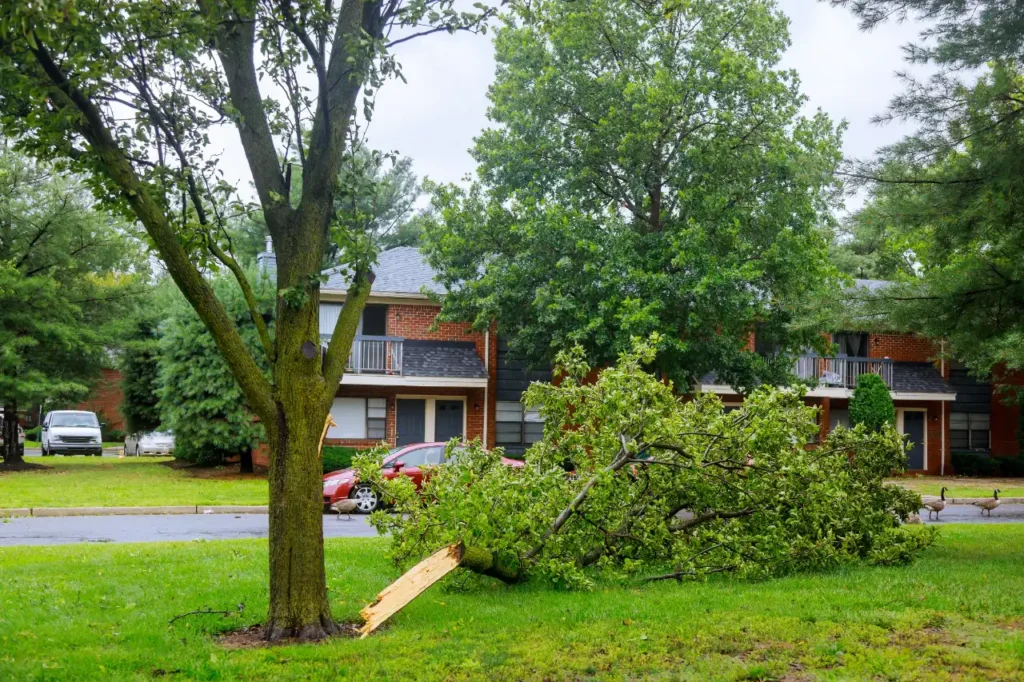
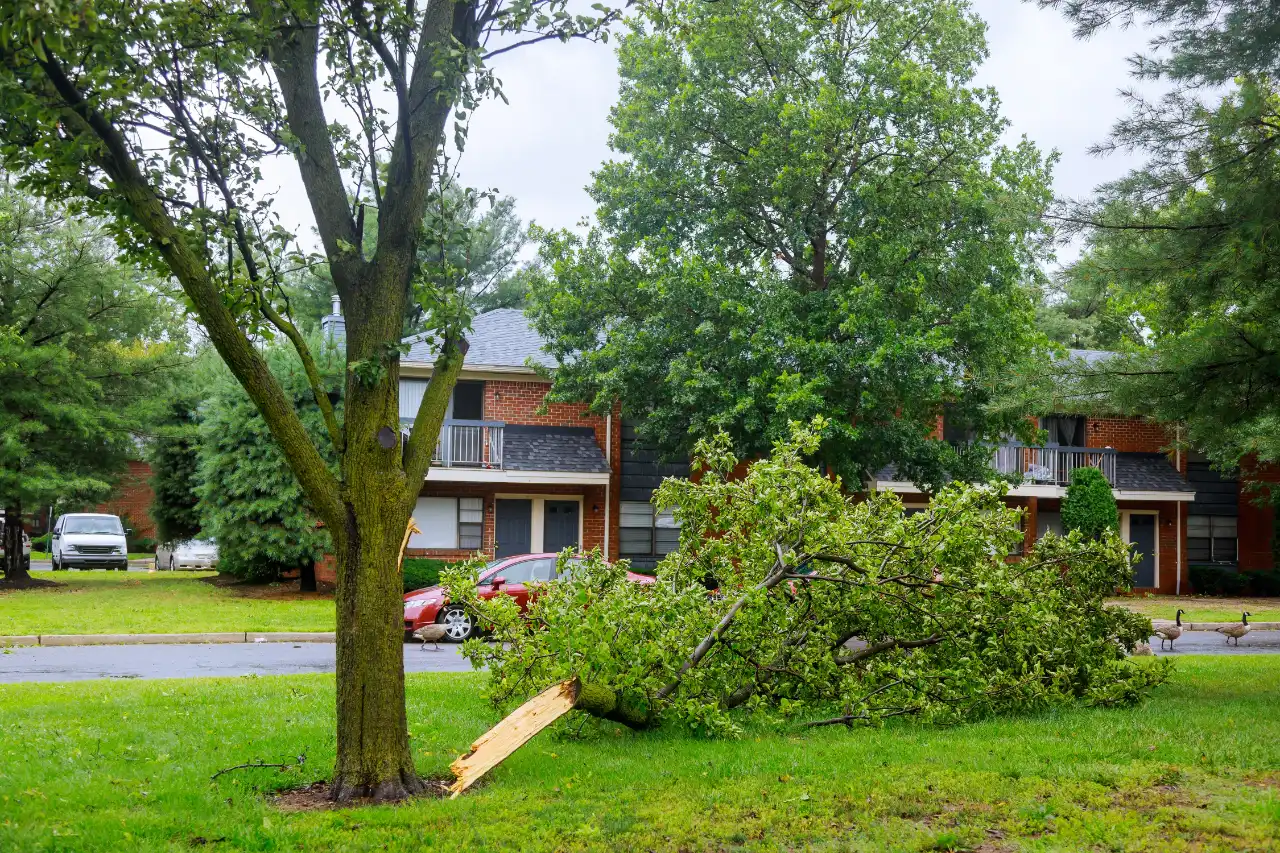
Most homeowners notice the signs a tree is dangerous only after a storm drops a limb on the driveway. The good news is that a failing tree usually gives you warnings months or years ahead. You just need to know where to look.
In Connecticut, our trees take a beating. Nor’easters, heavy wet snow and ice storms load branches far past what they can carry. Rocky glacial soil and ledge also keep roots shallow, so big trees can tip when the ground gets soaked. A tree that stood fine for decades can fail after one bad winter.
Pests and disease add to the problem. Emerald ash borer has killed a lot of ash trees here, and beech leaf disease keeps spreading. Many oaks are still weak from the spongy moth years. Below, you’ll learn what to check from the ground and what each sign usually means. You’ll also see when it’s time to bring in a crew.
Dead Branches and a Thinning Crown
Start by looking up. Dead limbs have no leaves in summer, and the bark often peels or falls off in sheets. Large dead branches hanging over a roof, deck or driveway are the first thing to deal with.
Next, compare the crown to nearby trees of the same kind. A thin canopy, small pale leaves or leaves that drop early can point to root stress or disease.
On ash trees, watch for woodpecker damage and bark splitting near the top. On beech, look for dark stripes between the leaf veins. Both problems move fast once they show up, so don’t wait a few seasons to act.
Cracks, Cavities and Fungus on the Trunk
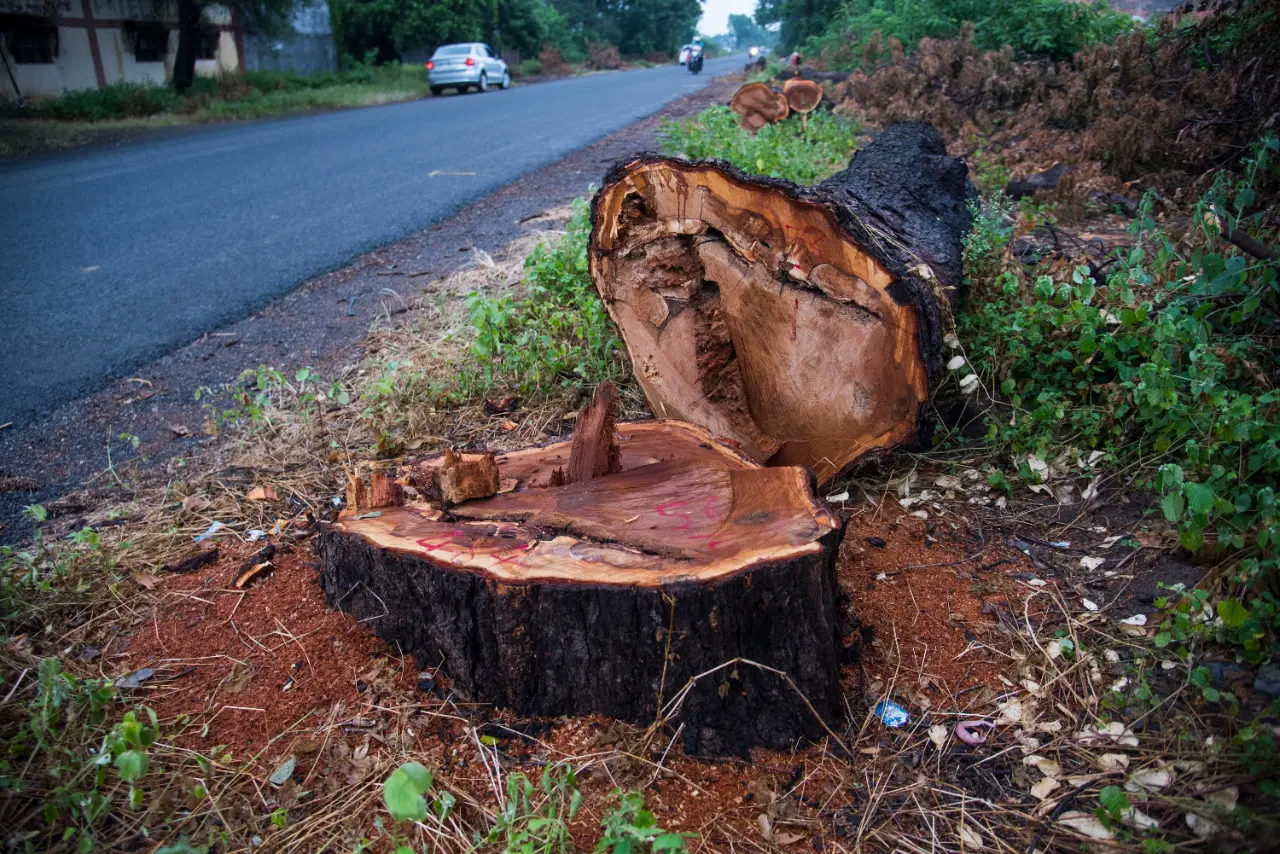
Walk around the trunk slowly. Deep vertical cracks, open cavities and soft or crumbly wood all mean the tree has lost strength inside.
Mushrooms or shelf-like fungus growing at the base or on the trunk usually signal internal decay. Sawdust piles and lots of small holes point to insects working inside the wood.
Pay attention to trees with two main trunks joined in a tight V. That joint can trap bark and split under snow or wind. If you see a crack running down from the V, that tree needs a closer look soon. A weak split like this often fails during the first heavy snow of winter.
Leaning Trees and Root Problems
A tree that has leaned for decades is often fine. A new lean is a different story. If the soil is heaving or cracked on the side away from the lean, roots may be letting go.
Check the base for missing root flare, where the trunk should widen as it meets the ground. Buried flares, girdling roots and soil piled against the bark all weaken a tree over time.
Recent digging matters too. Driveway work, new patios and drainage trenches often cut major roots. On ledge and rocky soil, roots have nowhere else to go, so that damage hits harder here.
When to Call for Tree Removal or Trimming
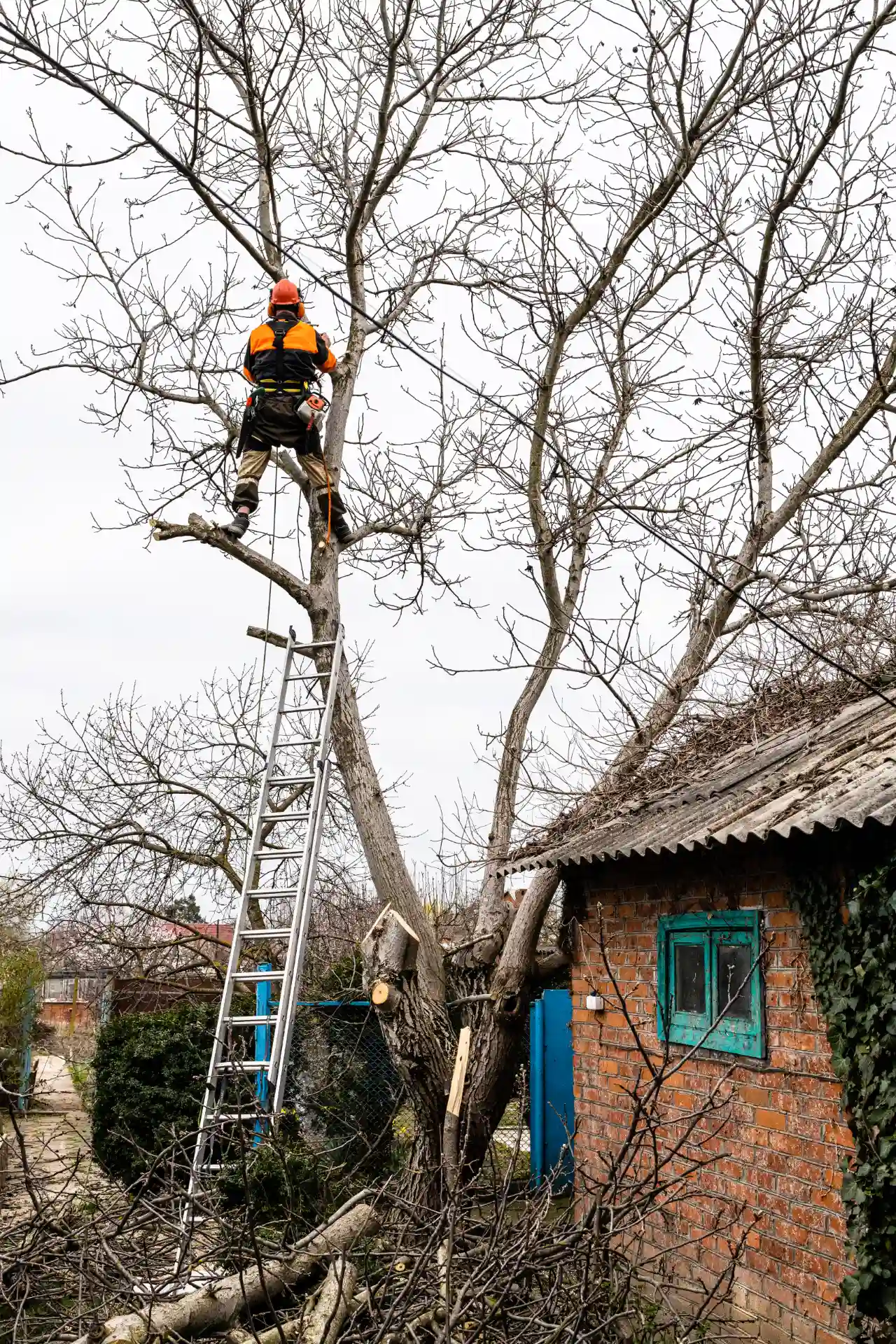
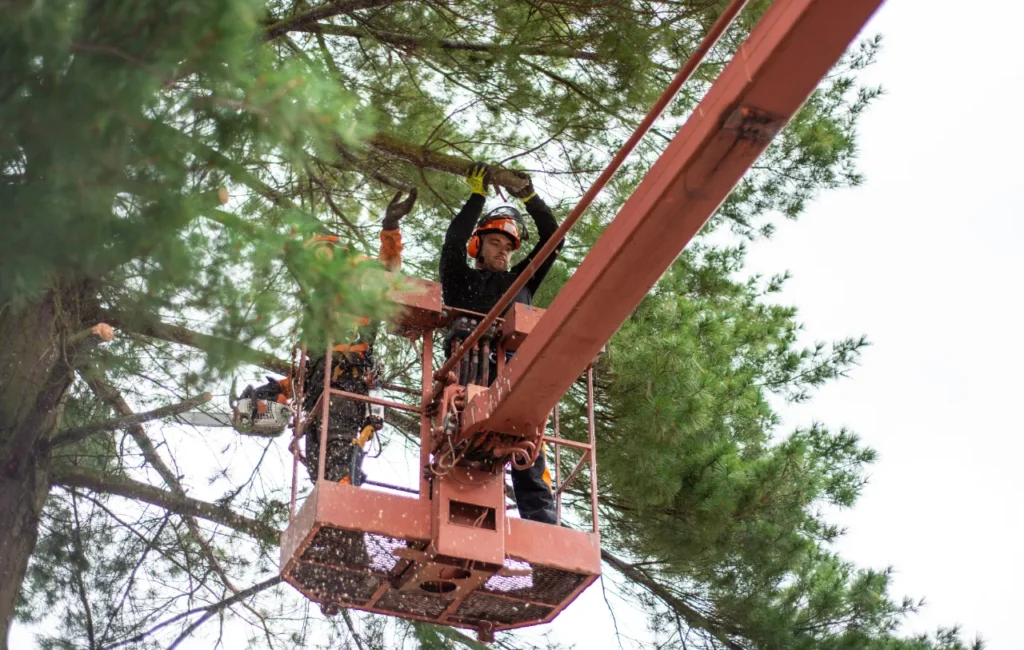
Not every warning sign means the tree has to come down. Sometimes careful tree trimming takes weight off a heavy limb and buys the tree years. Other times, decay or root failure means tree removal is the safer call. Our crew looks at the whole tree, the target below it and the access around it. Then we tell you straight what makes sense. You can read more in our guide on tree trimming vs tree removal.
For trees near the road, your town tree warden may control what happens, so check first. Keep kids and cars clear of a tree you’re worried about until it’s looked at.